50 cl is equivalent to 500 ml. This conversion is based on the decimal metric system: the prefix “centi” means one hundredth, while “milli” means one thousandth. One centilitre therefore contains ten millilitres, and fifty centilitres contain five hundred. This equivalence is absolute, regardless of the liquid being measured, because it relates exclusively to volume.
Measuring 500 ml in the kitchen: the container makes all the difference
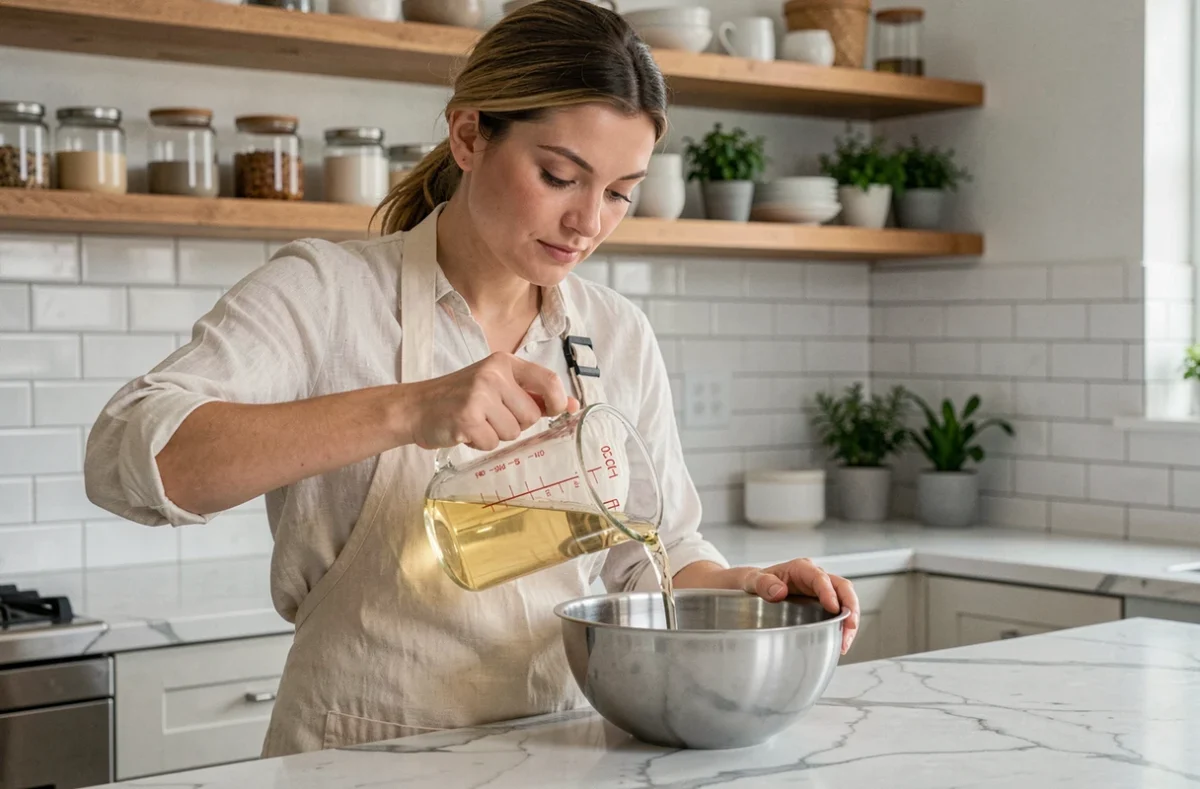
The mathematical conversion is straightforward. The real challenge is measuring those 500 ml in everyday use. A regular glass, mug or bowl has no guaranteed capacity. Pouring “about 50 cl” into an unmarked container is estimating, not measuring.
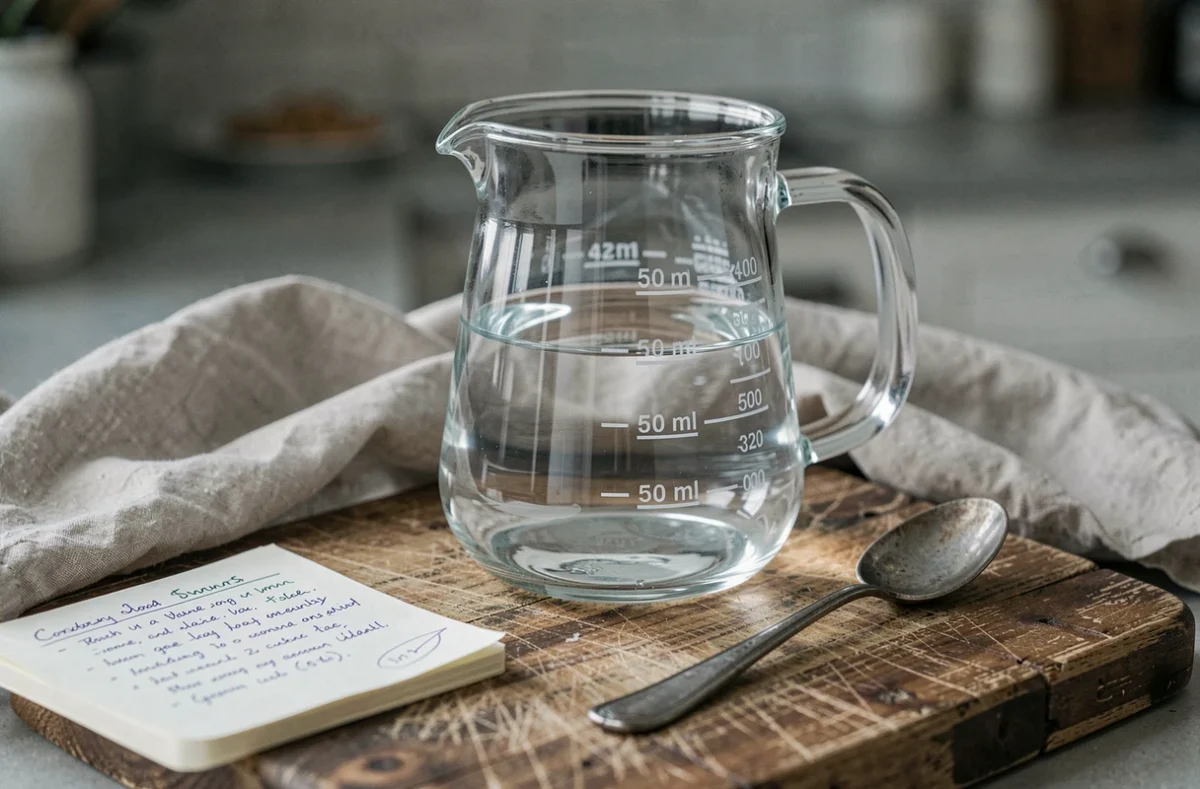
A graduated measuring jug placed on a flat surface and read at eye level gives a reliable result. For water-based liquids (water, milk, stock), read the measurement at the bottom of the meniscus. The slight dip formed by the liquid’s surface against the side of the container can distort the measurement if you look down at it or view it from an angle.
To easily find the equivalence between 50 cl and ml and apply it to other volumes, the rule is always the same: multiply centilitres by ten to get millilitres, and divide millilitres by ten to convert back to centilitres.
On a standard kitchen measuring jug, the markings are spaced far enough apart to read 500 ml unambiguously. Errors are more common with small volumes (5 cl, or 50 ml), where a wide container makes the level harder to read accurately. The narrower the container, the easier it is to read the markings for the same change in volume.
Ingredient volume and weight: why 500 ml does not always weigh 500 g
Converting 50 cl to 500 ml answers the question of volume. But many recipes give measurements in grams. 500 ml of water weighs about 500 g, but this is not true of all liquids. Oil is less dense than water, so it floats on its surface. Half a litre of oil therefore weighs noticeably less than half a litre of water.
Honey and syrups are denser, so the same volume weighs more than water. This difference between volume and mass becomes critical in baking, where precise proportions determine the final texture.
Common ingredients and how they measure up at 500 ml
- Water and milk have a density close to 1: their volume in millilitres and weight in grams are almost identical, making conversions easy for everyday cooking.
- Oil (olive, sunflower, rapeseed) is lighter than water: 500 ml of oil weighs less than 500 g, a difference to bear in mind when a recipe gives a weight.
- Honey and glucose syrup are considerably heavier: 500 ml of honey weighs well over 500 g, which matters if you substitute a volume measurement for a weight measurement.
- Powders (flour, icing sugar, cocoa) measure differently depending on whether they are packed or aerated, making volume-to-weight conversions even less reliable without scales.
A practical rule: when a recipe gives a volume in cl or ml for a water-based liquid, converting directly to grams works. For any other ingredient, kitchen scales are the safest option.
Cl-to-ml conversion chart for common recipe measurements
Multiplying by ten works for every value, but keeping the most common measurements handy saves you from calculating at every step of a recipe.
| Centilitres (cl) | Millilitres (ml) | Practical reference |
|---|---|---|
| 1 cl | 10 ml | One level tablespoon |
| 5 cl | 50 ml | A small liqueur glass |
| 10 cl | 100 ml | A mustard glass |
| 25 cl | 250 ml | A large glass of water |
| 33 cl | 330 ml | A standard can |
| 50 cl | 500 ml | A small bottle of water |
| 75 cl | 750 ml | A bottle of wine |
| 100 cl | 1,000 ml | One litre |
These everyday references help you visualise a volume when no measuring jug is available. A small shop-bought bottle of water contains exactly 50 cl, or 500 ml, and can serve as a handy reference for checking the capacity of another container.
Adjusting measurement precision to the type of recipe
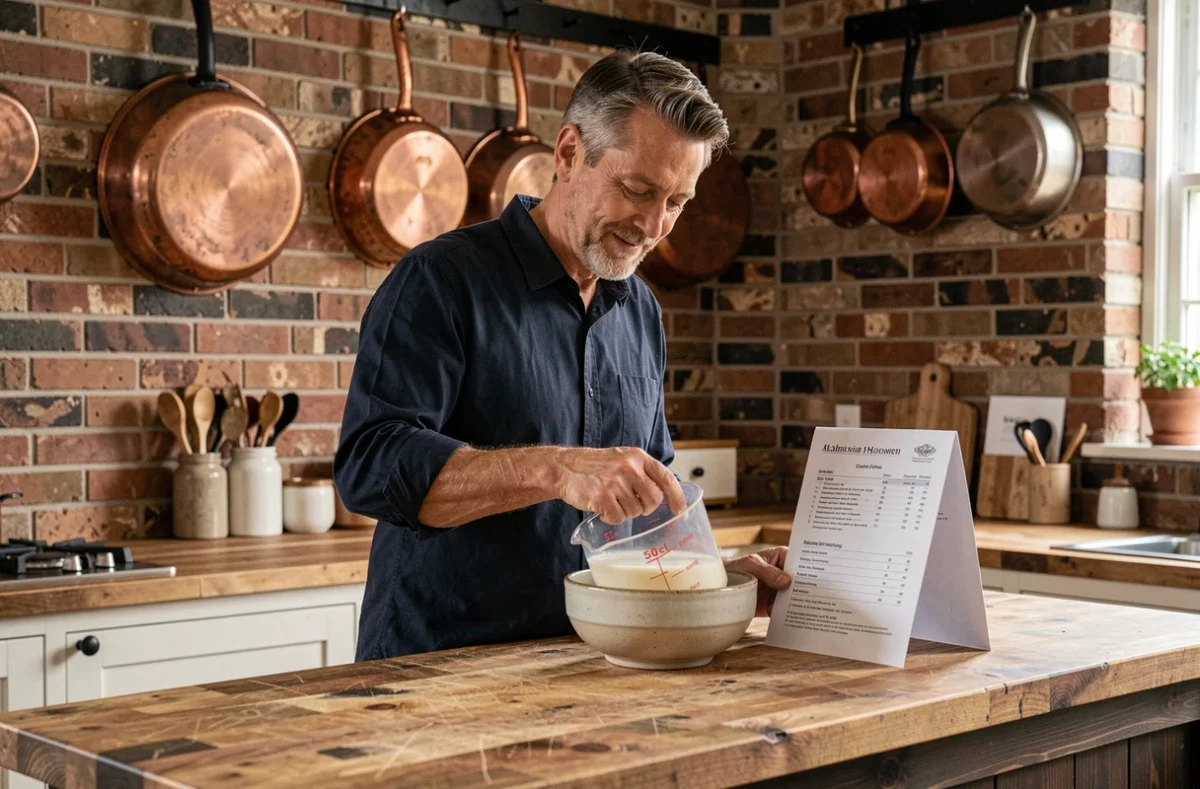
A soup or stock can tolerate a difference of a few dozen millilitres without any noticeable effect. Caramel, custard or choux pastry, on the other hand, do not respond well to approximate measurements. The level of precision required depends on the recipe, not the unit used.
For forgiving preparations (soups, stews, marinades), a visual reference using a 50 cl bottle or mustard glass is enough. For baking and emulsified sauces, a graduated measuring jug read at eye level is the bare minimum.
When a tablespoon can replace a measuring jug
Small quantities are often given in centilitres in French recipes: 2 cl of rum, 3 cl of lemon juice, 5 cl of cream. A level tablespoon holds about 1 cl (10 ml). This reference lets you measure without getting out a graduated jug for every ingredient.
A common mistake is confusing a tablespoon with a teaspoon. A teaspoon holds about one-third as much as a tablespoon, or roughly 0.3 cl. Mixing the two up in a baking recipe can noticeably affect the final result.
Converting 50 cl to 500 ml involves no arithmetic difficulty. The difference between a successful recipe and a failed one rarely comes down to the formula; it almost always depends on the measuring tool and how you read the liquid level.