
Comparing equestrian holiday camps involves measuring criteria that are rarely placed side by side: equestrian supervision, center accreditation, hours spent riding, complementary activities, and consideration of animal welfare. These parameters vary greatly from one organization to another, and the difference between two stays of the same price may hinge on details that catalogs do not always highlight.
FFE Labels and Supervision: What a Comparative Table Reveals
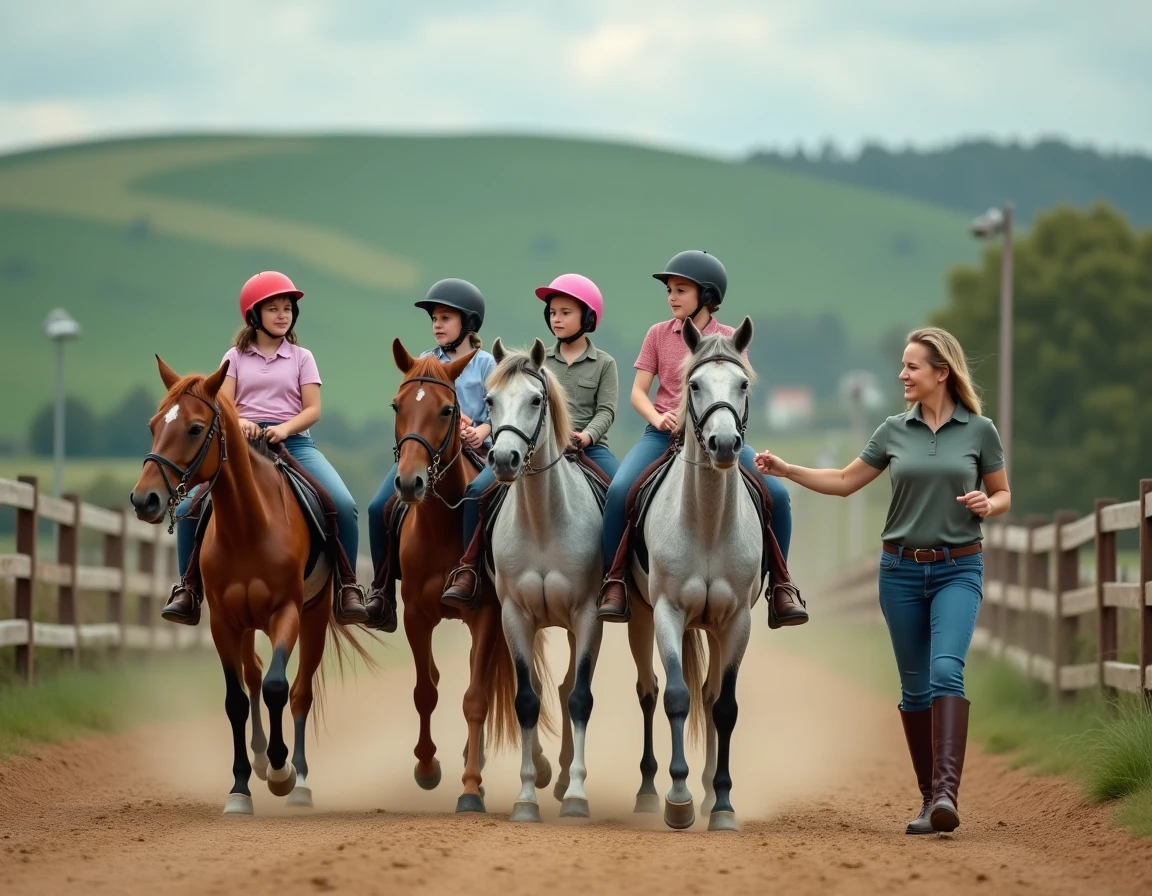
The French Equestrian Federation (FFE) has been awarding labels since 2022, such as French Equestrian School or Pony Club of France, which impose specific criteria on safety, quality of teaching, and animal welfare. Not all equestrian stays are associated with a labeled center.
| Criterion | Labeled FFE Center | Non-labeled Center |
|---|---|---|
| State-certified instructor required | Yes (BPJEPS or equivalent) | Variable, sometimes only BAFA animator |
| Instructor/children ratio in riding sessions | Defined by FFE specifications | Set by the organizer, without external reference |
| Equine welfare (limiting riding hours/day) | Integrated since the FFE-IFCE Charter 2023 | No formal framework |
| Ground activities (care, ethology) | Included in the educational program | Optional depending on the facilities |
| Periodic quality control | Regular FFE audit | No specific equestrian control |
This table highlights a structural gap. A parent who identifies the FFE label on the stay’s information has a verifiable foundation of guarantees, whereas the absence of a label requires asking every question oneself.
Choosing a equestrian holiday camp for children associated with a labeled center reduces the uncertainty regarding the quality of the teaching provided.
Equine Welfare in Camps: A Criterion That Changes the Content of the Stay
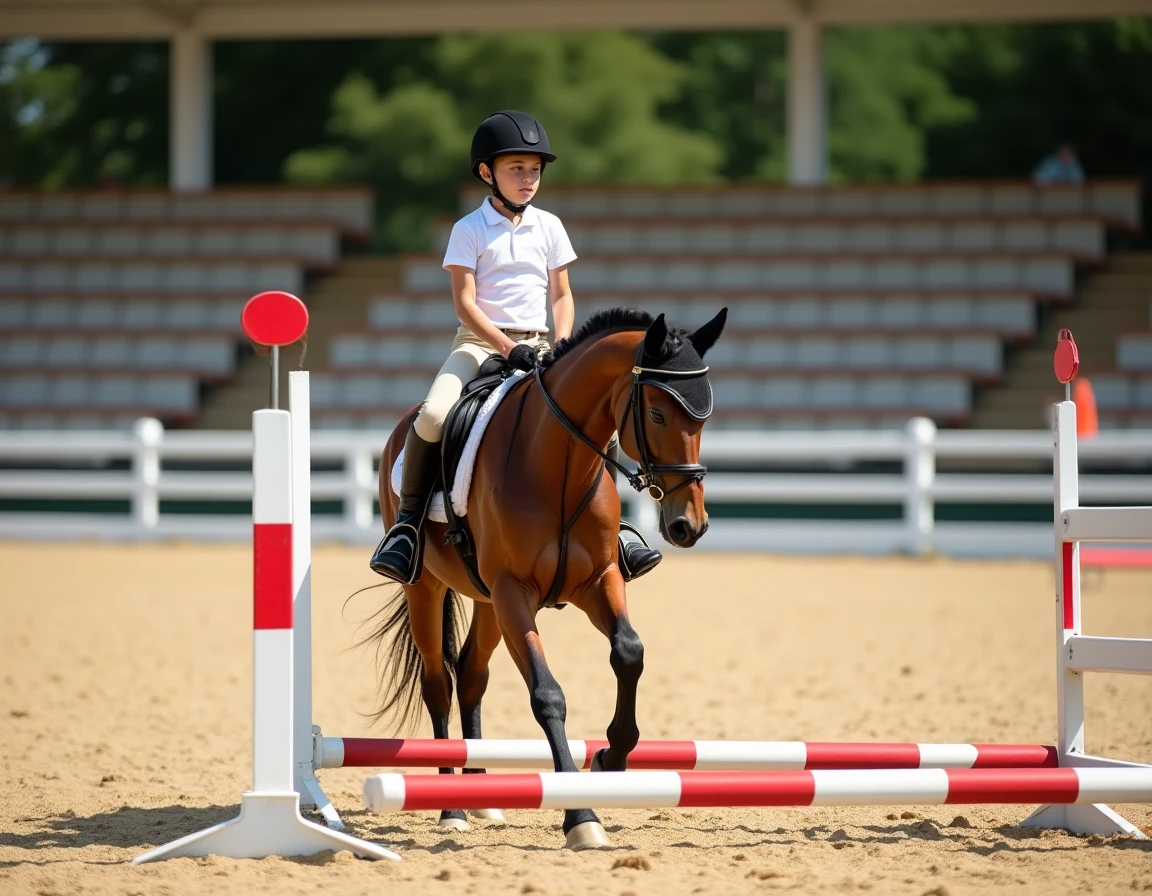
The Charter for Equine Welfare, jointly promoted by the FFE and the French Institute of Horse and Equestrian Activities (IFCE) in its 2023 version, has concretely modified the conduct of certain stays. Several centers have revised their organization to limit the number of riding hours per day and diversify ground activities.
This evolution has a direct effect on the program offered to children. Where a classic stay might align three daily riding sessions, centers applying the charter integrate times for observing equine behavior, in-depth grooming, and an introduction to ethology.
What the Charter Changes for Children
- Days alternate between riding time and ground time, reducing physical fatigue for beginner riders and ponies
- Ground activities (care, observation, free work) develop understanding of the horse beyond the technique in the saddle
- The workload of ponies and horses is detailed in the stay descriptions, allowing parents to objectively compare two programs
A stay that clearly displays the distribution between riding hours and ground activities sends a signal of transparency. Conversely, a program that only mentions riding sessions may indicate a lesser consideration for animal welfare, or simply a lack of communication.
DJEPVA Declaration and Insurance: Administrative Checks Not to Be Overlooked
Every holiday camp, regardless of its theme, falls under the regulation of collective reception of minors (ACM). The Directorate of Youth, Popular Education, and Associative Life (DJEPVA) oversees these stays through regularly updated circulars.
An equestrian stay adds a layer of complexity. Specialized insurers in outdoor sports have tightened their requirements in recent years, particularly regarding safety protocols related to mounted activities. Checking that the organizer holds a valid ACM declaration and insurance specifically covering equestrian activities remains a basic reflex.
Administrative Points to Check Before Registration
- ACM declaration number with the DJEPVA, available upon request
- Civil liability insurance certificate covering supervised equestrian activities
- Qualification of supervising staff: BPJEPS equestrian for instructors, BAFA or equivalent for daily life animators
- Existence of a written protocol in case of an accident (evacuation, veterinary contact, informing parents)
These checks take a few minutes and help eliminate poorly prepared structures.
Complementary Activities and Age Groups: Adapting the Stay to the Child’s Profile
Equestrian camps are available in single-activity stays (intensive riding) and multi-activity formulas. The choice depends as much on the child’s riding level as on their appetite for collective life.
A child who already rides regularly at a club will benefit from an intensive stay with several sessions per day and progressive work on technique. In contrast, a beginner or a hesitant child will gain more from a multi-activity stay combining riding, outdoor activities (tree climbing, hiking, swimming), and free time.
The age group also influences the rhythm of the stay. Stays intended for younger children generally provide shorter days on horseback and more rest time. For teenagers, some centers offer multi-day equestrian hikes with camping, which requires a higher level of autonomy and physical condition.
The intersection of riding level, age, and type of complementary activities remains the most reliable framework for distinguishing between two stays with comparable prices. A detailed day-by-day program, when provided by the organizer, allows for measuring the actual density of the stay rather than relying solely on the promises of the catalog.