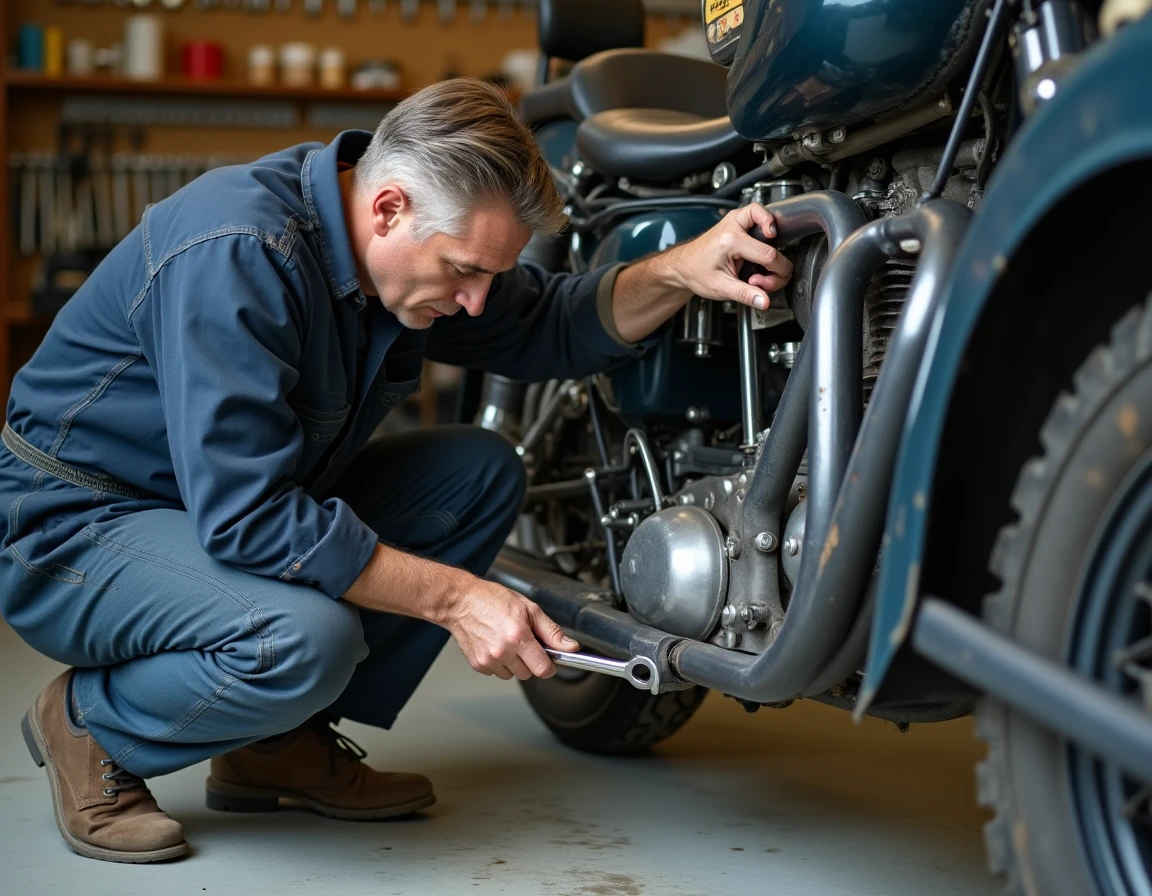
Each motorcycle-sidecar combination constitutes a unique configuration under French regulations. A motorcycle approved for solo use may lose its compliance once a sidecar is attached if the modification has not been validated by the competent DREAL. Before modifying the chassis, the question is not whether your motorcycle “can” receive a sidecar, but whether the final combination will be accepted as is.
Chassis Geometry and Anchor Points: What Determines Feasibility
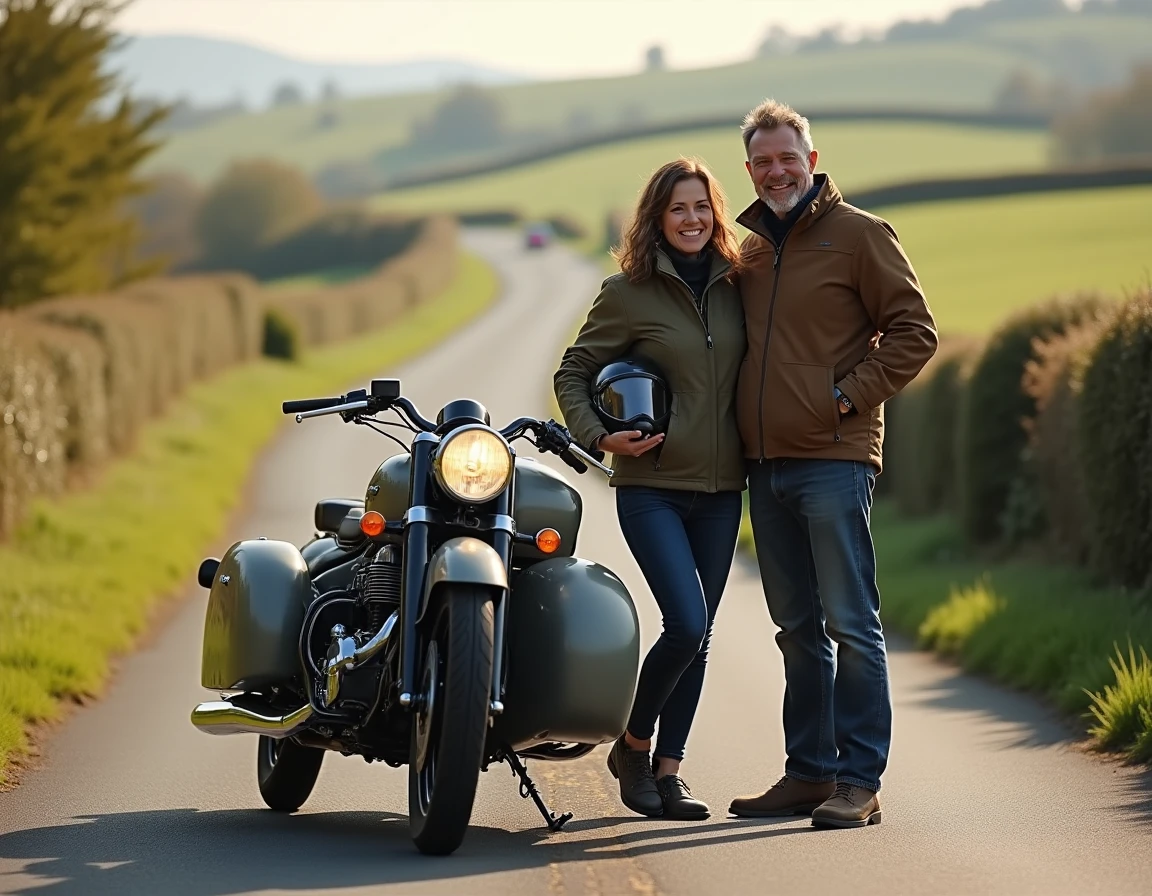
The engine power is not the first criterion to examine. The rigidity of the frame and the geometry of the steering column determine whether a sidecar can be integrated without compromising road holding. A classic steel tubular frame offers more usable attachment points than a perimeter aluminum frame, which is stiffer locally but less tolerant to the asymmetrical lateral forces generated by the sidecar.
We recommend checking three areas before any installation: the engine mounting brackets (often used as lower anchors), the cradle or reinforcement under the seat (upper rear anchor), and the steering column itself, which bears a permanent torsional stress with a sidecar attached.
On certain architectures (trails with a trellis frame, roadsters with a cast aluminum frame), the load pickup points are simply not designed for continuous lateral stress. It is possible to weld reinforcements, but this alters the original structure and complicates homologation. To delve deeper into the structural and compatibility criteria, it remains relevant to convert a motorcycle into a sidecar with Auto Scoop by consulting the technical sheets by model.
Sidecar Suspensions and Braking: Adapting the Motorcycle to Mass Transfers
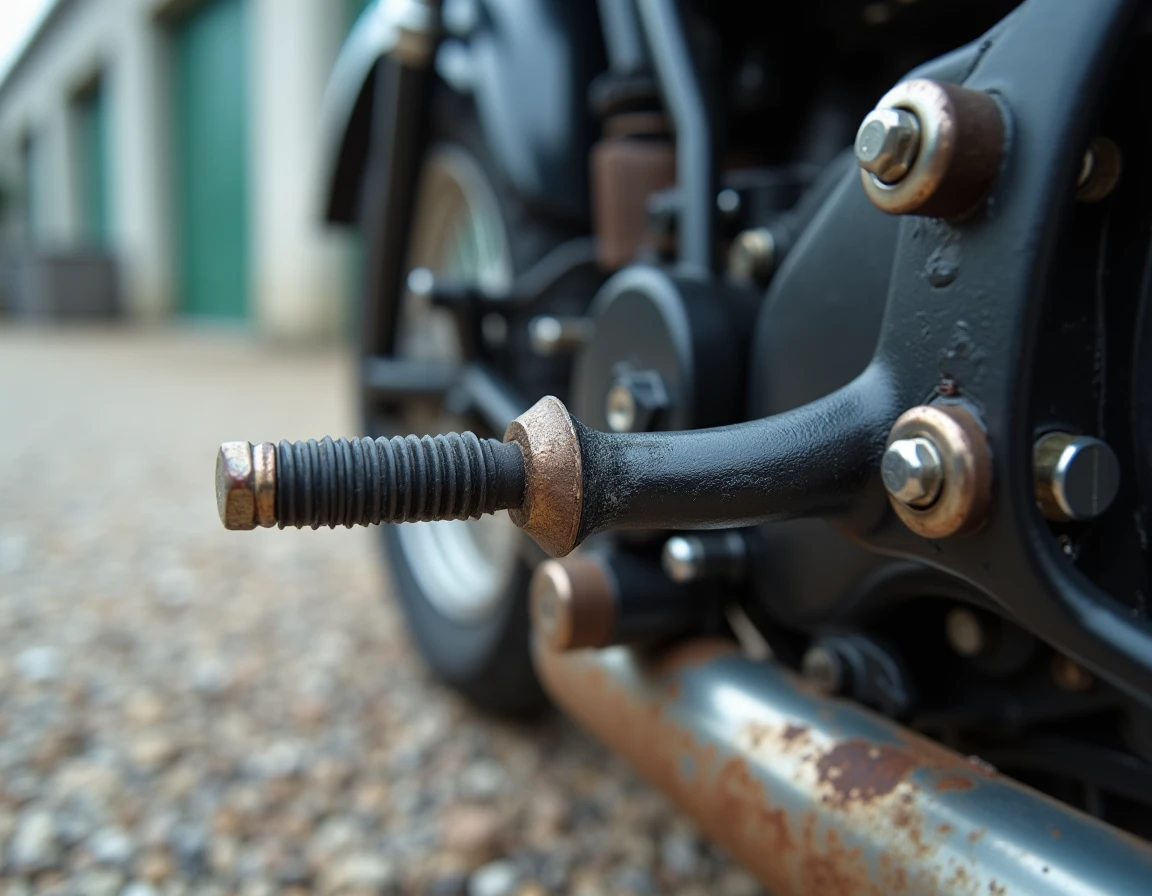
A sidecar behaves neither like a motorcycle nor like a car. Mass transfers are asymmetrical by nature: in a turn on the sidecar side, the whole pushes outward; on the opposite side, the sidecar tends to lift. This behavior imposes modifications that many amateur setups underestimate.
Front Suspension: Rake and Spring
The front fork experiences a lateral torsional force absent in solo configuration. The original rake (angle and offset of the fork) is calibrated for counter-steering, a principle that no longer works with three wheels. Slightly reducing the rake improves the maneuverability of the setup, but this modification requires a suitable fork crown or offset spacers.
The fork spring on the sidecar side works harder. We regularly observe forks that bottom out after a few hundred kilometers if the spring rate has not been adjusted. A firmer progressive spring on the sidecar side, combined with slightly thicker fork oil, corrects the problem without replacing the entire assembly.
Braking: Asymmetry and Distribution
The braking of a solo motorcycle relies on a front-rear distribution. With a sidecar, the sidecar wheel must be braked to avoid a violent swerve during deceleration. A disc or drum brake on the sidecar wheel, connected to the rear circuit or an independent control, radically changes stability during braking.
Without a brake on the sidecar wheel, any hard braking causes the whole to pivot around that free wheel. The effect is even more pronounced on wet pavement.
DREAL Homologation and Sidecar Registration: The Actual Procedure
In France, converting a motorcycle into a sidecar falls under the isolated type approval (RTI). Each motorcycle-sidecar combination must be presented individually to the DREAL in your region. The fact that the same model of sidecar has been accepted on an identical motorcycle in another region guarantees nothing: interpretations vary from one service to another.
The RTI file generally includes:
- A technical description of the setup (mounting plans, dimensions, empty weight of the sidecar, center of gravity position)
- A certificate of conformity from the sidecar manufacturer, or failing that, a report from a certified engineer
- A specific technical inspection report for “transformed vehicle,” distinct from the standard inspection
Once the RTI is obtained, the registration document is modified: the type changes from “MTL” (motorcycle) to “CL” (moped or sidecar according to the nomenclature), and the mention of the number of wheels is updated. Without this update, the insurance may refuse any coverage in case of a claim.
Choosing the Sidecar Kit: Often Overlooked Compatibility Criteria
The market offers universal kits and kits dedicated to a specific model. Universal kits are appealing due to their price, but they almost always require custom adaptations (plates, spacers, silent blocks) that increase the final cost.
Here are the points to check before purchase:
- The height of the sidecar wheel axle compared to the rear axle of the motorcycle: a too pronounced vertical offset causes permanent weaving
- The wheelbase of the setup (distance between the front axle and the sidecar wheel axle): too short, the whole becomes twitchy; too long, low-speed maneuvers become cumbersome
- The empty weight of the sidecar: a sidecar that is too light lifts more easily in turns, a sidecar that is too heavy overloads the motorcycle and accelerates wear on the steering bearings
- The toe and camber of the sidecar wheel, adjustable on good kits, fixed on entry-level models
On motorcycles like the BMW boxer or Moto Guzzi with a transverse engine, the crankcase extends laterally and can conflict with the lower attachment bars. This packaging issue, rarely mentioned in product sheets, sometimes requires a specific kit or a sidecar mounted further back.
Converting a motorcycle into a sidecar remains a project where mechanics, regulations, and road behavior intertwine. A sidecar that is mispositioned by a few centimeters generates a vicious behavior that even an experienced rider will struggle to compensate for. It is better to dedicate time to sizing than to choosing the paint.