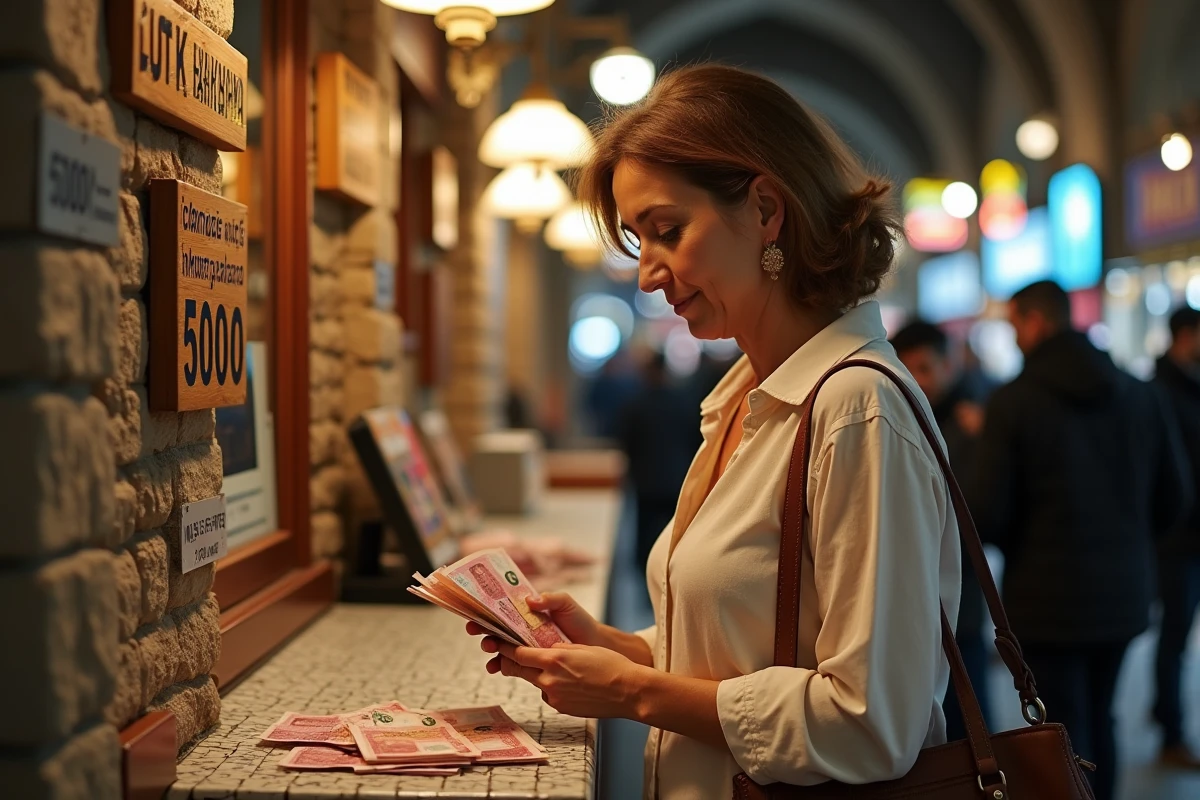
The private exchange offices (Döviz Bürosu) in Istanbul display significantly tighter spreads than bank counters since several Turkish banks have restricted the availability of foreign currency notes at their counters. This context, linked to the macroprudential measures of the Central Bank of Turkey (CBRT) on foreign currency deposits, has redistributed the cash exchange market in favor of the private network.
Real spread and hidden fees of Döviz Bürosu in Istanbul
A Turkish exchange office generally does not charge an explicit commission. The profit lies in the gap between the buying rate (alış) and the selling rate (satış) displayed on the board. It is this spread that should be read, not the gross rate.
Two offices located just a few meters apart in the Grand Bazaar can display a gap of several tens of kuruş per euro. Comparing the satış rate between three boards takes less than a minute and can represent a tangible difference on an amount of a few hundred euros.
Some offices in very touristy areas (Sultanahmet, near the Egyptian Bazaar) inflate their spread without the traveler realizing it. To anticipate this margin, you can exchange euros for Turkish lira in Istanbul by comparing the mid-market rate available on converters like XE with the satış rate displayed at the counter.
Reading the board correctly
- Alış (buying): the rate at which the office buys your euros. This is the rate that concerns you when you sell euros for Turkish lira.
- Satış (selling): the rate at which the office sells you euros. Unnecessary for a European tourist arriving with euro notes.
- If the board displays a single rate without distinction, ask for verbal confirmation before the transaction. Some small offices in outlying neighborhoods simplify the display.
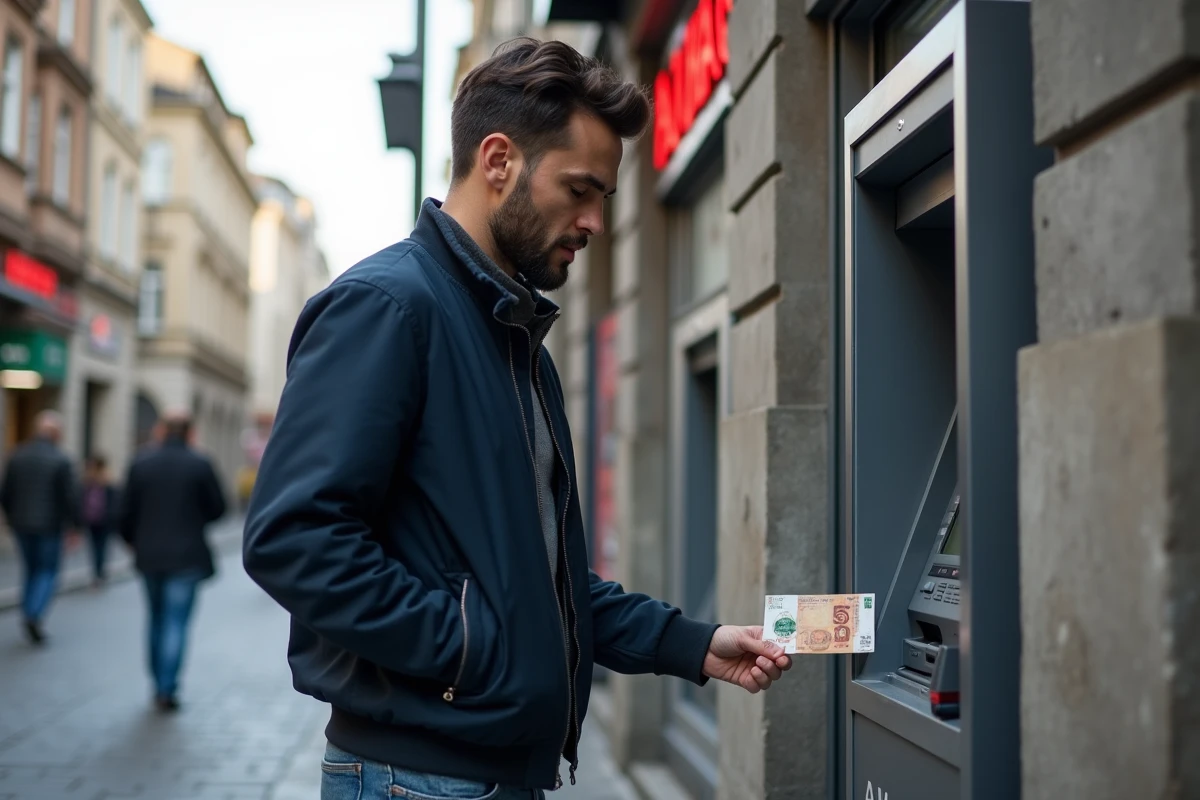
ATMs and bank cards in Turkish lira: fees vary by Turkish bank
Not all Turkish banks charge the same fees on foreign cards. Public institutions like Ziraat Bankası or VakıfBank offer withdrawals without additional fees on the Turkish bank side for holders of international cards, whereas private banks like İşbank or Garanti BBVA apply a fixed commission per withdrawal.
This distinction is rarely mentioned in general guides. However, it changes the game: a withdrawal at an ATM of a Turkish public bank generates only the commission from your own French bank (and possibly the Visa/Mastercard exchange margin), while a withdrawal at a Turkish private bank adds a layer of fees.
Card payment or cash withdrawal
Contactless payment works in most shops in Istanbul. Turkish terminals systematically offer the choice of debit currency (DCC, Dynamic Currency Conversion). Always refuse the conversion to euros proposed by the terminal: accepting the DCC means paying a markup of several percent compared to the rate applied by your Visa or Mastercard network.
Neo-banks like Revolut or Wise offer rates close to the mid-market with exchange limits without fees. If you have one, it remains the most economical option for card payments in Turkey.
Istanbul neighborhoods and exchange rates: where to focus
The most competitive exchange offices are not found in monumental areas. The shopping streets frequented by Istanbulites offer better rates because the competition between offices is local, not touristy.
The Beyoğlu district, around Istiklal Caddesi, has a high density of Döviz Bürosu. Offices located in adjacent streets (not directly on the pedestrian avenue) often display a finer spread. Kadiköy, on the Asian side, also offers favorable rates in a less tourist-oriented environment.
Istanbul Airport: the bare minimum
Only change at the airport what is strictly necessary for a taxi or transport ticket. The exchange counters at Istanbul Airport apply the least favorable rates in the city. A few dozen euros are enough to reach the city center, where exchange conditions are incomparable.
Hotels practice a spread similar to that of the airport. The same logic applies: emergency only.

Optimal amount and cash management in Turkish lira
The Turkish lira is regularly depreciating against the euro. Exchanging a large sum at the beginning of your stay exposes you to a loss of value if the stay lasts more than a week. Splitting exchange operations into two or three visits to the office rather than one limits this risk.
Euro notes are accepted in some hotels and travel agencies, but the conversion rate applied is rarely favorable. For public transport (Istanbulkart), markets, and small shops, the Turkish lira remains the only accepted currency.
Also think about the return: Turkish lira are practically impossible to convert back to euros once in France. French exchange offices almost all refuse them or apply a discouraging rate. It’s better to end your stay with a balance of lira close to zero.
Splitting the exchange, choosing the right ATM, and systematically refusing the DCC are the three concrete levers to optimize your exchange budget in Istanbul. Over a week-long stay, the cumulative difference between a thoughtful strategy and airport exchange followed by random withdrawals can represent the equivalent of several meals.